If you have spent any time on a pit wall, you have heard the phrase, "The car feels good." In my eight seasons as a data analyst, those four words were the bane of my existence. "Feeling good" is a subjective, qualitative data point that tells me nothing about the structural integrity of the rubber or the thermal decay rates of the tyre carcass.
When we talk about aero balance, we are not talking about a static setup choice. We are talking about the distribution of vertical load across the contact patch. Changing your aero balance is essentially deciding which tyre—or pair of tyres—you are willing to sacrifice for the sake of lap time.
Let’s run a quick back-of-the-envelope calculation: if you shift your center of pressure forward by 2% to improve turn-in, you are effectively increasing the vertical load on the front axle by roughly 10-15kg per corner at high speed. Over a 20-lap stint, that is thousands of extra joules of energy dumping into the front-left shoulder. If you don't calculate the subsequent heat soak, you aren't racing; you're just waiting for a puncture.
The Physics of the Tradeoff: Thermal vs. Mechanical Decay
Aero balance dictates the slip angle at which the tyres operate. If the aero is too rear-biased, the front tyres aren't generating enough heat to get into their operating window, leading to "cold tearing." If the aero is too front-biased, you overheat the surface, moving beyond the optimal adhesion curve and into the territory of degradation.
Academic literature, such as recent research published in Applied Sciences (MDPI), highlights the non-linear relationship between aerodynamic loading and tyre temperature. When you increase the downforce, you do not just get a linear increase in grip; you get a geometric increase in thermal degradation. This is the setup tradeoff that defines every endurance stint.
Aero Balance Bias Primary Tyre Load Degradation Characteristic Risk Factor Forward (Front) Front-Left/Right Surface Grain/Overheating Understeer mid-stint Neutral Balanced Uniform Wear Low (Optimized) Rearward Rear-Left/Right Thermal Blistering Power-down traction lossIt is important to call out that this table is a partial comparison. It assumes a static track surface and a constant ambient temperature, which, of course, does not exist in the real world. Every time a cloud passes over the circuit, the track temp drops, the tyre pressure changes, and your "perfect" aero balance suddenly shifts in its effectiveness.
Telemetry and Data Density
To understand what is happening inside the tyre, we rely on high-frequency telemetry. We are looking at more than just tyre pressure and surface temp sensors. We are looking at the oscillation of the uprights and the vertical acceleration of the dampers.
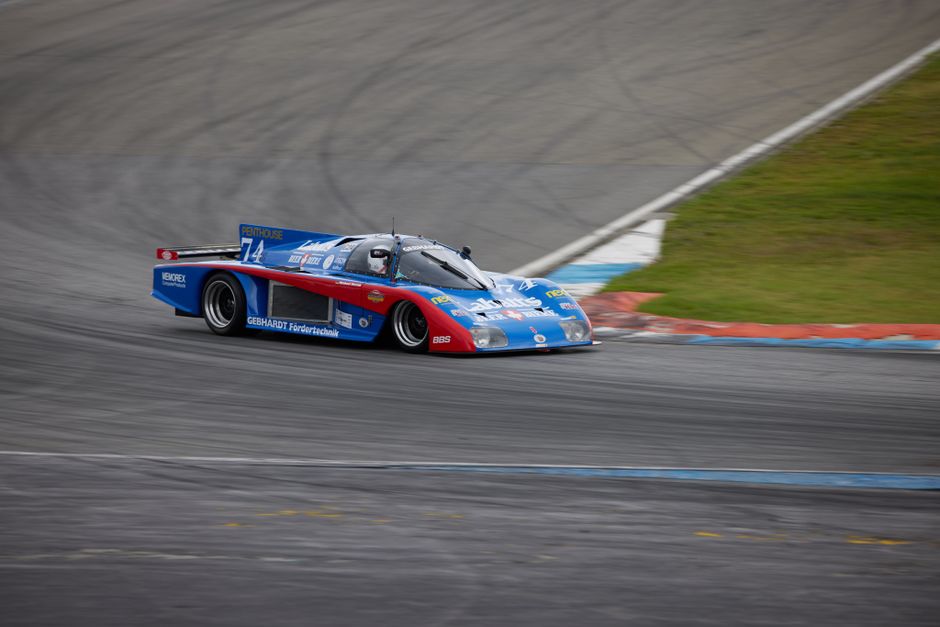
Telemetry provides the raw data density required to build a model. Without high-fidelity data, you are essentially flying blind. When I see a driver complaining about "vague steering," I look at the telemetry to see if the aero balance is causing a transient drop in load due to pitch sensitivity. If the data shows a 5% oscillation in load during corner entry, the driver is not dealing with a handling issue; they are dealing with an aerodynamic instability.
Moving Beyond Certainty: The Monte Carlo Principle
One of my biggest pet peeves in motorsport is the overstatement of certainty. Teams love to act as if they have "solved" the race. In reality, they are operating in a probabilistic environment. You cannot predict the exact moment a tyre will fall off the cliff; you can only calculate the probability of it occurring within a given time window.
This is where the Monte Carlo principle becomes essential. Instead of running one simulation of a 30-lap stint, we run ten thousand. We vary the inputs: track surface temperature, driver braking habits, fuel burn rate, and traffic density. The output is not a single line representing the "perfect" stint; it is a distribution curve.
When you see data models provided by companies like MrQ in the betting world, they are doing something remarkably similar to what a high-end endurance team does on the pit wall. They aren't predicting one outcome; they are mapping the probability space of all outcomes to understand where the "value" or the "edge" lies. In racing, we use these distributions to decide when to box the car. If the probability of the tyre remaining above the critical grip threshold for three more laps drops below 40%, we bring the car in.
Real-Time Decision Making on the Pit Wall
The pit wall is often romanticized as a place for "gut instinct" and "racing feel." I have never seen a championship won on instinct alone. The reality is a high-pressure exercise in data synthesis. When the driver reports a change in balance, we are not looking at a crystal ball. We rtp meaning in gaming and racing are looking at the deviation from the pre-race simulation.
As explored in various analyses from the MIT Technology Review, the complexity of modern simulation tools has changed how we make decisions. We no longer rely on a single engineer's experience. We rely on the synergy between human oversight and automated decision-support systems. When the driver calls out a balance shift, we feed that input into the model to see if it aligns with the telemetry.
If the telemetry shows a loss of front downforce due to trailing a car, we adjust the strategy. If the telemetry shows no change in downforce but the driver is feeling a loss of grip, we have a problem with the tyre’s internal structure—likely a heat-soaked carcass that will not recover, regardless of the aero balance.
Conclusion: There is no "Magic Bullet"
Stop looking for a "game-changing" adjustment that will fix your tyre wear. It doesn't exist. There is only the rigorous, boring, and essential work of managing trade-offs. You trade off high-speed stability for corner exit traction. You trade off immediate qualifying pace for long-term stint longevity.
The best teams are not the ones with the most "instinctive" race engineers. They are the teams that understand the probability of their setup failing and have a clear, data-driven plan for when the distribution curve inevitably swings toward the worst-case scenario. Aero balance is simply one of the many knobs we turn to nudge the odds in our favor.
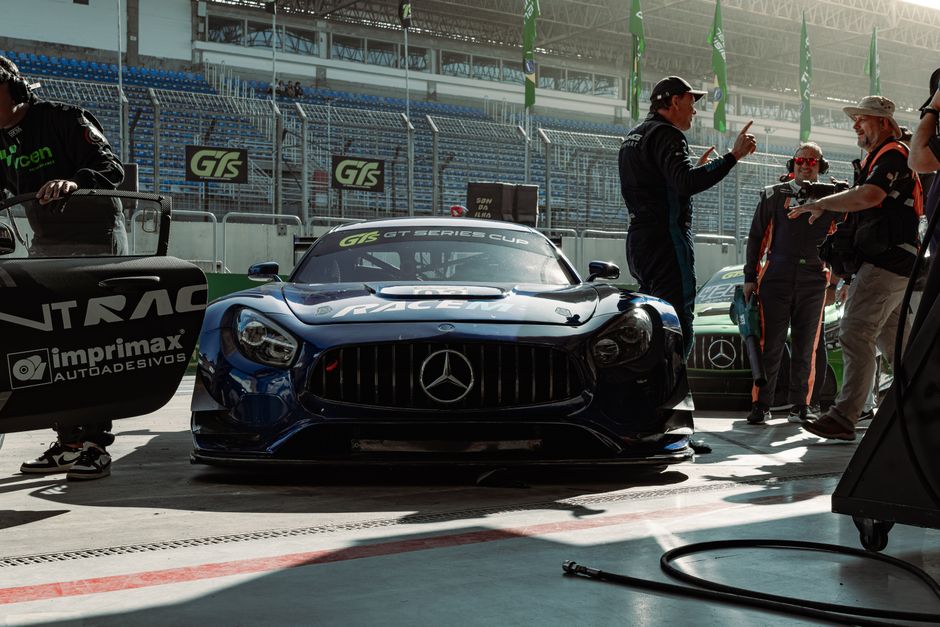
Next time you watch a race, don't look at the lap times. Look at the balance. If you see a driver fighting the car in the closing stages of a stint, they aren't struggling with "feel." They are struggling with the math—and the math finally caught up with them.